|
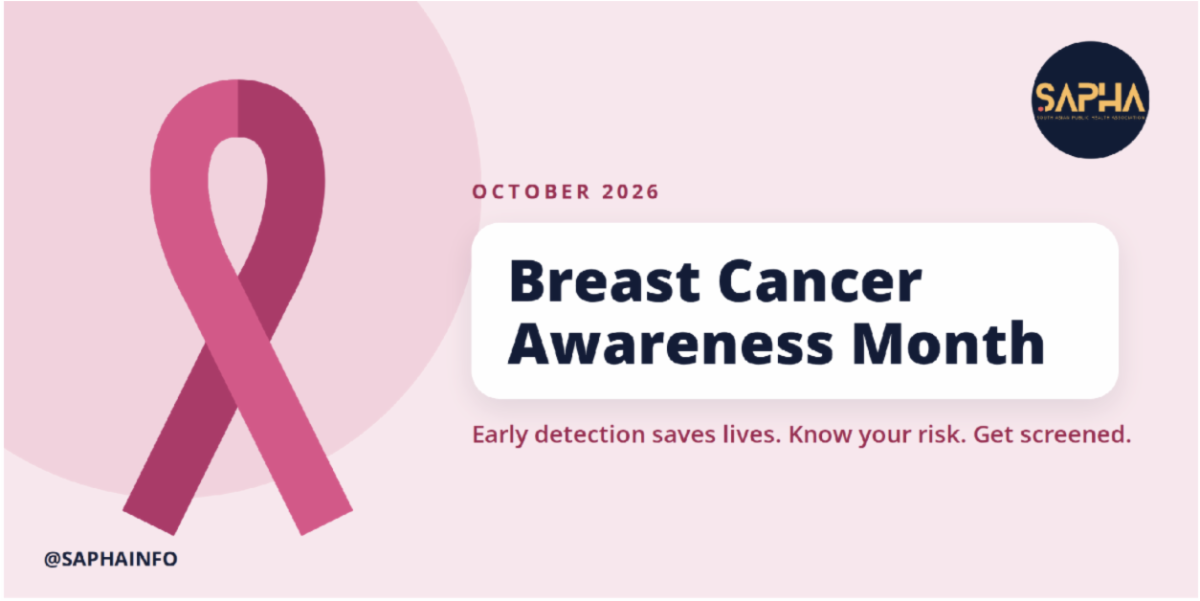
October is Breast Cancer Awareness Month, a time to raise awareness about breast cancer, encourage early detection, and support everyone affected by the disease. Breast cancer is the most common cancer diagnosed in women, and for South Asian American women, it can look different.
A national study published last month analyzed records from more than 2.3 million women with breast cancer. South Asian American women were diagnosed about six years younger, on average, than non-Hispanic White women. Nearly 38% of South Asian American women in the study were diagnosed before age 50, compared with about 21% of White women. South Asian American women were also more likely to have aggressive subtypes, such as triple-negative and HER2-positive breast cancer, and were more often uninsured.1 The researchers call for earlier, culturally tailored screening efforts for younger South Asian women.
Finding breast cancer early saves lives. A screening mammogram, an X-ray of the breast, can detect cancer before symptoms appear, when treatment is most likely to succeed. The U.S. Preventive Services Task Force recommends a mammogram every two years for women ages 40 to 74.2 Cost should not stand in the way: the CDC’s National Breast and Cervical Cancer Early Detection Program offers free or low-cost mammograms to women ages 40 to 64 who are uninsured or underinsured and have limited incomes.3
|
|
|
Protect Yourself & Loved Ones This October
|
|
|
Know Your Normal
Because South Asian women are often diagnosed younger, before routine screening begins at 40, it is important to know how your breasts normally look and feel and to report changes right away. According to the CDC, warning signs include:4
- A new lump in the breast or underarm (armpit)
- Thickening, swelling, irritation, or dimpling of breast skin
- Redness or flaky skin in the nipple area or the breast
- Pulling in of the nipple, pain in the nipple area, or nipple discharge other than breast milk, including blood
- Any change in the size or shape of the breast, or pain in any area of the breast
Many of these symptoms can be caused by conditions that are not cancer, but any change should be checked by a doctor.
Breaking the Silence: Be Brave About Breast Health
In many South Asian families, breast health is rarely discussed, and women often put everyone else’s health before their own. Yet breast cancer can affect younger women too, and South Asian women are often diagnosed before routine screening begins at 40.
Starting the conversation, whether with your mother, sisters, aunties, or friends, may help someone get screened sooner. CDC’s Bring Your Brave campaign can help: it shares real stories and information to help women under 45 learn their risk and talk with their doctors.
October Action Checklist
- Schedule your mammogram if you are 40 or older and due for screening.
- Know your family history: ask relatives about breast, ovarian, and other cancers, and share it with your doctor, who can advise whether to start screening earlier.
- Speak up at the doctor’s office: report any breast changes, even if you are under 40.
- Share the free screening link with anyone who may be uninsured or underinsured.
|
|
|
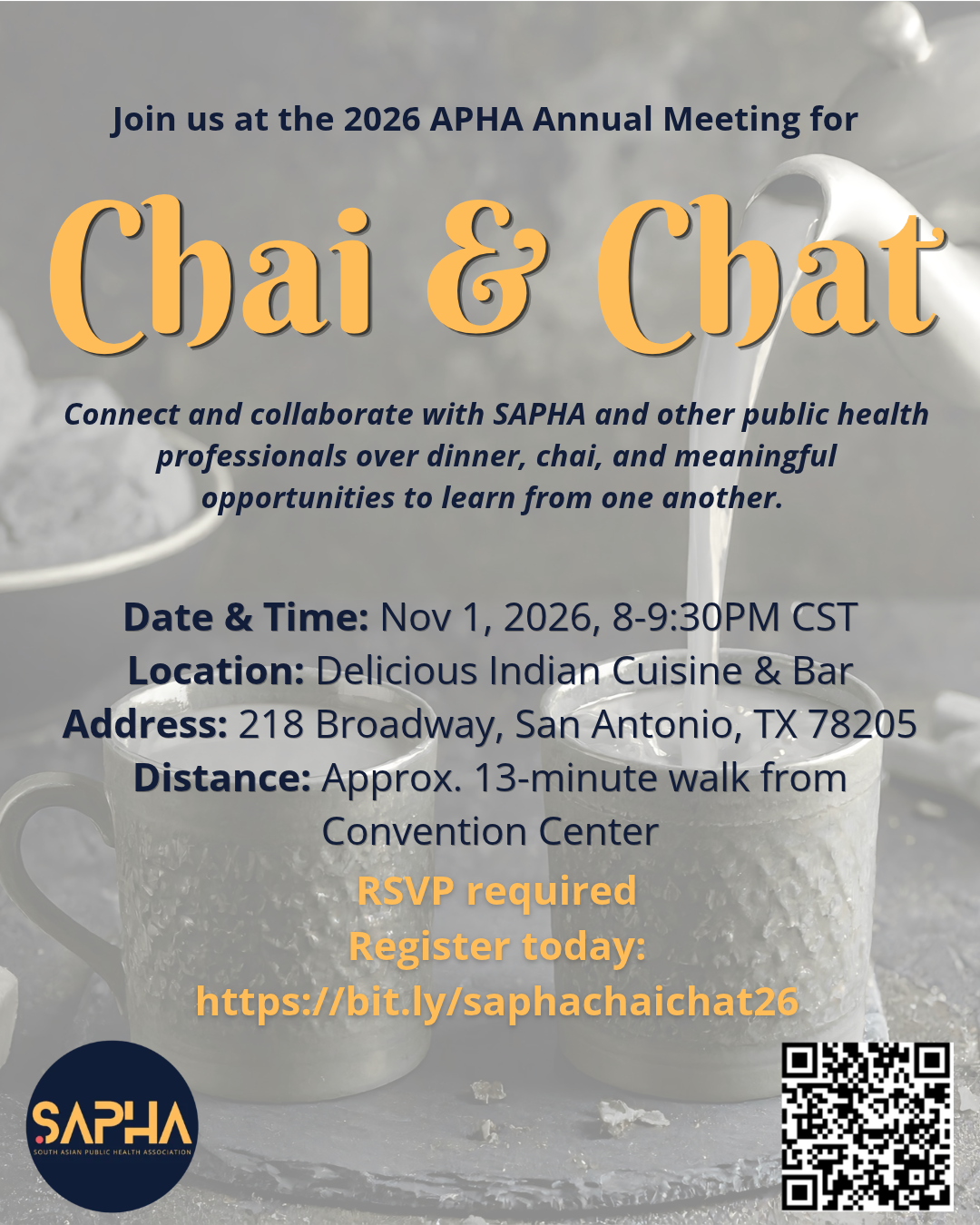
The American Public Health Association (APHA) 2026 Annual Meeting & Expo takes place November 1–4 in San Antonio, Texas, bringing together public health professionals from across the country. SAPHA will be there, and we hope to see you!
Chai & Chat: Sunday, November 1, 8:00–9:30 PM
Join us for SAPHA’s annual Chai & Chat networking event, a dinner to catch up with colleagues, meet new people, and connect with the SAPHA community. Registration required. Please register here.
SAPHA Poster Presentation
4140.00 An analysis of of sentiments and misinformation regarding mental health among the South Asian diaspora on X (Twitter) over a period of time - A mixed methods study - Presenter: Sushraya Jay Tuesday November 3rd 3:20-3:30PM
South Asian Research
We compiled a listing of South Asian-focused research presented at this year’s meeting, so you can find and support the work of our community.
|
|
|
Policy Spotlight & News
Keep Pushing for South Asian Heart Health
Last month, we shared that Reps. Pramila Jayapal and Joe Wilson and Sen. Cory Booker reintroduced the bipartisan South Asian Heart Health Awareness and Research Act (H.R. 10520 / S. 5430). SAPHA endorses the bill, and its sponsors are still recruiting cosponsors from both parties. If you haven’t yet, contact your Senators (senate.gov) and Representative (house.gov) and ask them to cosponsor the bill. Your Vote Is Your Voice: Election Day is November 3
Next month will be a decisive one for the fate of South Asian Americans and the issues impacting our community!
November 3rd is Election Day, when all 435 U.S. House seats and 33 U.S. Senate seats will be up for election. Additionally, 36 states are holding governor elections, and 88 legislative chambers across the country are also holding elections.
It is critical that South Asian Americans are registered to vote and informed about the issues impacting the health and well-being of our community, with healthcare costs and affordability being a top concern in the lead-up to elections.
Be sure to check your state's voter registration deadlines.
Visit our partners at APIAVote’s website to learn more about how to register and why voter engagement matters for the Asian American and Pacific Islander community!
|
|
|
Climate Advocacy Workshop
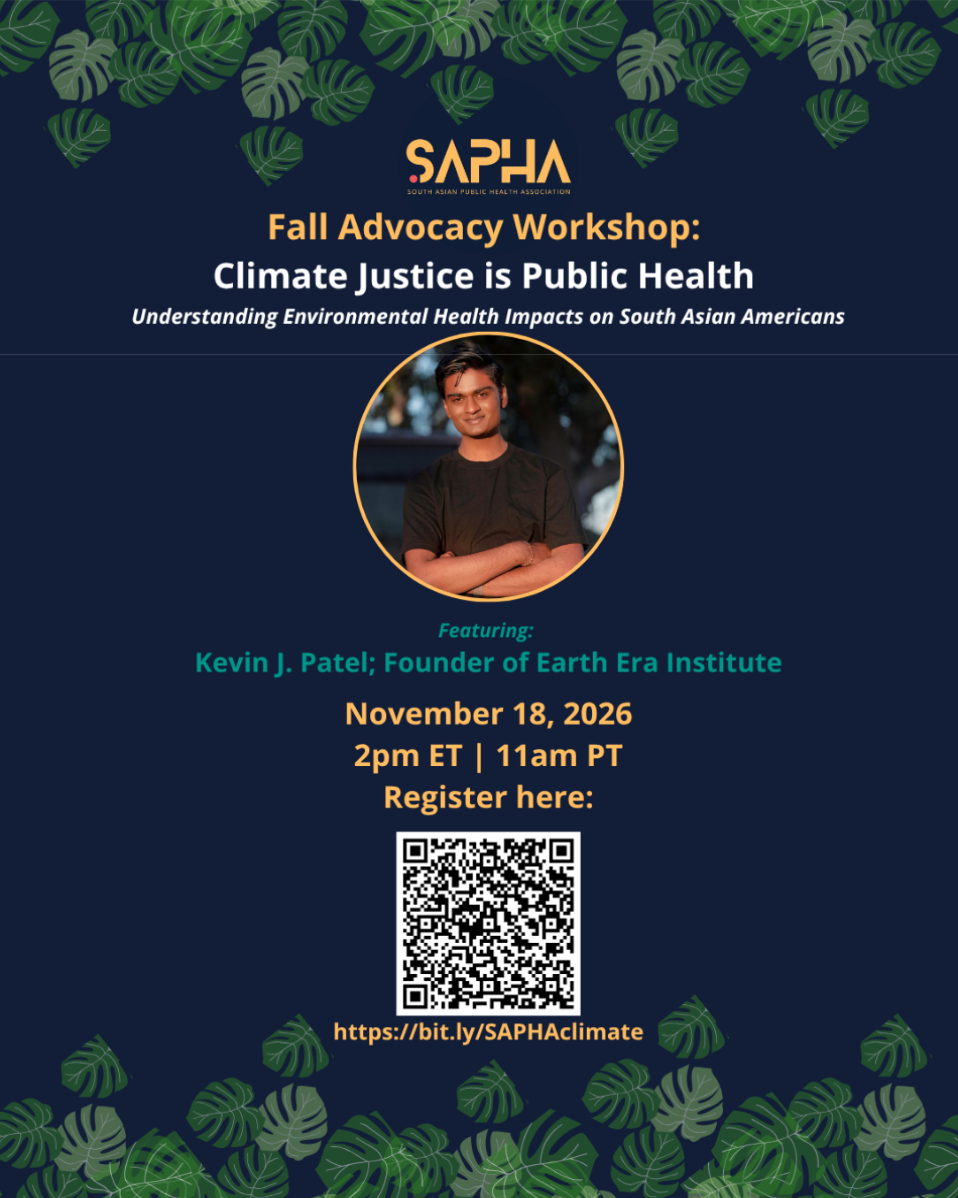
Fall Advocacy Workshop: Climate Justice is Public Health, November 18
Join SAPHA and our Climate Health Taskforce on Wednesday, November 18 at 2 PM ET / 11 AM PT for an interactive workshop on the intersection of climate justice and public health, featuring Kevin J. Patel, climate justice advocate and Founder of Earth Era Institute. Participants will learn about climate advocacy, intergenerational leadership on community-rooted climate solutions, and resources from SAPHA’s Climate Health Toolkit.
Register here
|
|
|
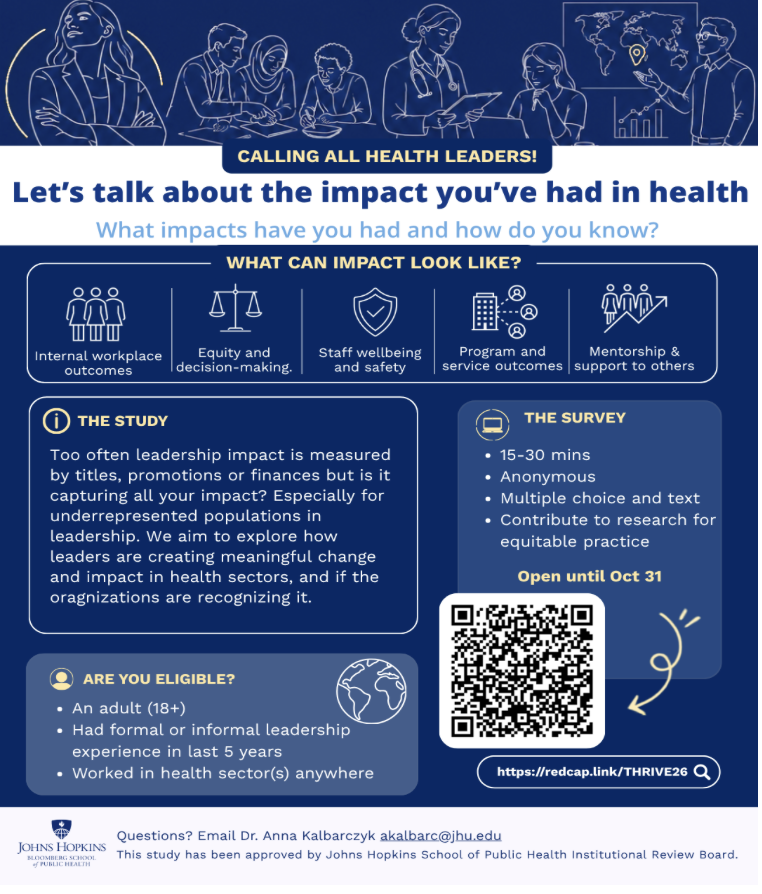
The Johns Hopkins Bloomberg School of Public Health invites health leaders to take the THRIVE Leadership Impact Survey, which explores how leaders across health-related sectors create and demonstrate impact, and whether their organizations recognize it, especially for leaders from groups underrepresented in leadership.
Adults 18 or older who hold, or have held in the past five years, a formal or informal leadership role in any health-related sector are eligible.
The anonymous online survey takes about 15–30 minutes and is open through October 31.
Take the survey here. Questions? Contact Dr. Anna Kalbarczyk at akalbarc@jhu.edu
|
|
|
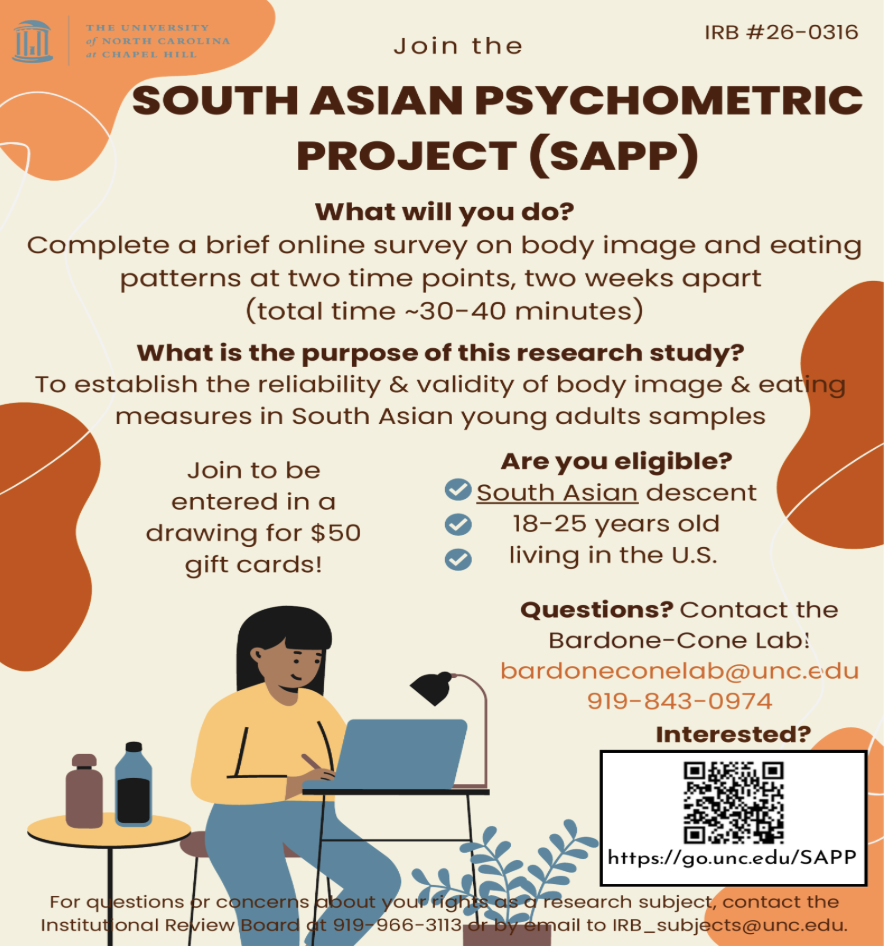
The University of North Carolina at Chapel Hill Department of Psychology & Neuroscience is recruiting South Asian young adults (ages 18–25) of any gender identity living in the U.S. for the South Asian Psychometric Project (SAPP), a study of body image and eating measures in this population (IRB #26-0316).
Participation involves two brief online surveys about two weeks apart (about 30–40 minutes total), and participants who complete both are entered into a drawing for $50 gift cards.
Start the first survey here. Questions? Contact bardoneconelab@unc.edu or (919) 843-0974.
|
|
|
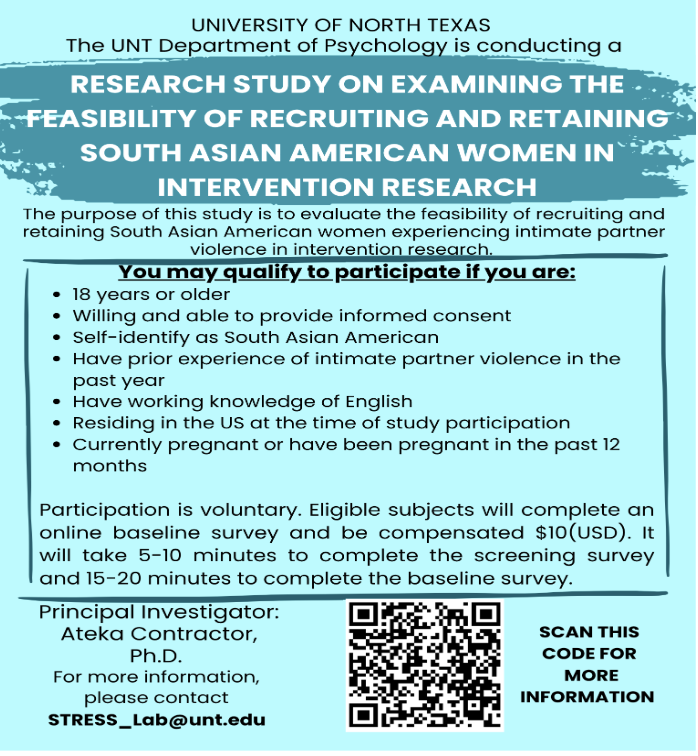
Researchers in the University of North Texas Department of Psychology are studying how to engage and retain South Asian American women who have experienced intimate partner violence in intervention research. You may be eligible if you are 18 or older, identify as South Asian American, have experienced intimate partner violence in the past year, have a working knowledge of English, live in the U.S., and are currently pregnant or have been pregnant in the past 12 months. Participation is voluntary.
The screening survey takes 5–10 minutes and the baseline survey takes 15–20 minutes, with $10 compensation for completing the baseline survey. Scan the QR code on the flyer for more information, or email STRESS_Lab@unt.edu.
October is Domestic Violence Awareness Month. If you or someone you know is experiencing abuse, free and confidential support is available 24/7 through the National Domestic Violence Hotline: call 1-800-799-7233 or text START to 88788.
|
|
|
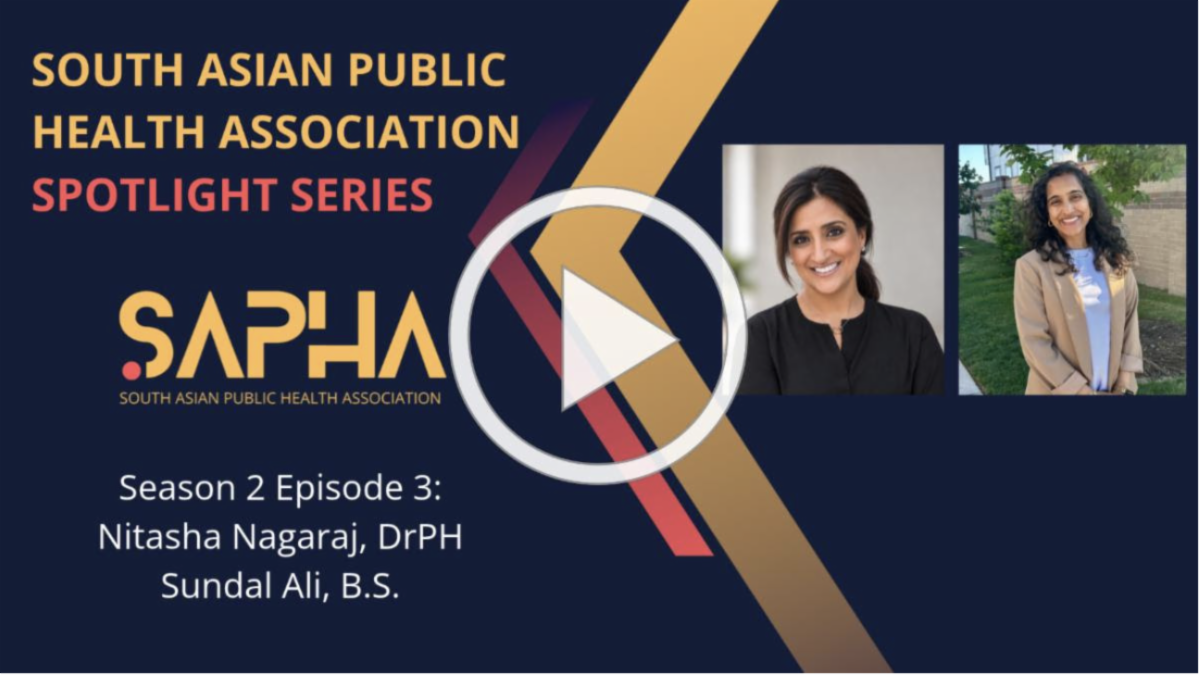
ICYMI: SAPHA Spotlight Series Season 2 Episode 3
We recently released Episode 3 of the SAPHA Spotlight Series featuring Dr. Nitasha Nagaraj, Associate Professor at the George Washington University Milken Institute School of Public Health and founder of the South Asian Women’s Research Initiative (SAWRI), and Sundal Ali, Executive Director of South Asian SOAR, a national network of more than 50 grassroots organizations working to end gender-based violence in South Asian communities.
In this episode, we bring together research and community-based advocacy to explore sexual and gender-based violence as a public health issue, its lifelong health impacts, and the barriers South Asian survivors may face when seeking support. Through this conversation, we discuss the role of stigma, family expectations, and institutional accountability, and what communities, researchers, and policymakers can do to strengthen prevention, support survivors, and create meaningful change.
Listen to this episode on Youtube or Spotify
|
Organization Spotlight: South Asian SOAR
South Asian SOAR is investing in the future of the South Asian gender justice movement by supporting organizations working to prevent violence and meet survivors’ needs. Through its recently released report, Beyond Survival: Investing in the Future of the South Asian Gender Justice Movement, SOAR highlights the urgent need for flexible, sustained funding to help organizations move beyond day-to-day survival and build long-term stability.
Following a 2024 pilot regranting initiative that raised and redistributed $50,000 to 30 member organizations, the report underscores the importance of investing in core survivor services, prevention, research, collective advocacy, and narrative change. By bringing attention to the financial challenges facing gender justice organizations, SOAR calls on funders, philanthropists, and community members to help build a more sustainable future for the movement. Learn more about SOAR online.
|
|
How You Can Make an Impact Today:
Help us continue raising awareness, sharing resources, and creating space for important conversations about mental health in South Asian communities. Your support helps us build healthier communities.
✅Donate to expand South Asian public health today
|
|
|
Know someone who might enjoy these newsletters?
Ask them to sign up for our email list here.
|
|
|
Follow us on social media for tips, resources, and community health updates
|
|
|
|
|