|
Resilience is the capacity to overcome, withstand, and grow from a challenge. As we celebrate Women’s History Month, we are reminded of the resilience and indomitability of the women who uplift our South Asian communities.
While March marks a month of hope and renewal, we also acknowledge the significance of cancer screenings. Colorectal cancer (CRC) is the third most common cancer worldwide, with almost two million new cases diagnosed each year. CRC screening and testing is critical for individuals above the age of 45 or those with underlying lifestyle risk factors. While research among SA populations is limited, studies show that SAs have generally low screening rates and are unaware of CRC screening recommendations. Modifying certain lifestyle habits, such as increasing physical activity and introducing a high-fiber diet, can decrease one’s likelihood of developing CRC later in life, however, screening early and often is best practice.
Utilizing a culturally sensitive approach, we urge our SAPHA community to encourage your loved ones to screen for CRC regularly if they are at an increased risk or above the age of 45.
Utilize SAPHA's Research Hub to dive deeper into CRC and how it impacts our community. The South Asian IBD Alliance (SAIA) also has resources available specific to patients who may be experiencing chronic gastrointestinal issues overlapping with CRC screens.
|
|
|
Celebrating the Fearless & Resilient Women Advancing Public Health
|
|
|
SAPHA is highlighting extraordinary women across the country who are actively contributing to South Asian public health advancements. These women have dedicated their lives to uplifting their communities through leadership, research, and advocacy.
Read their stories on our Instagram, Facebook, Twitter, and Linkedin pages.
|
|
|
We are proud to share that SAPHA is joining the Study of Mindful Aging and Racial Trajectories (SMART), led by Dr. Sunghee Lee from the University of Michigan’s Institute of Social Research, as a member organization on the study’s community advisory board. A collaborative effort (funded by the National Institute on Aging) between researchers at the University of Michigan, the University of Texas Health Science Center at Houston and State University of New York at Albany, SMART aims to study the connection between cognitive health and social relationships as people age. As one of the community partners, SAPHA will advise on several aspects of the study including recruitment, data collection, communication tool development, data interpretation and dissemination of findings to ensure the needs of our communities are met. For more information on SMART, please visit the study’s website: https://smart.isr.umich.edu/.
|
|
|
🎙️ICYMI: SAPHA Spotlight Series:
Season 2 Podcast Launch🎙️
|
|
|
SAPHA’s Spotlight Series returned with a new season celebrating the South Asian leaders, researchers, and changemakers who have shaped American public health. Season 2 — “Our Stories, Our Impact” — highlights the scientific breakthroughs, community-led initiatives, and public health innovations driven by South Asians across the country.
Our first episode of Season 2 just released, featuring Dr. Alka Kanaya, Professor of Medicine, Epidemiology, and Biostatistics at the University of California, San Francisco and founding investigator of the MASALA Study.
🎧 Listen now:
Listen on Spotify: https://buff.ly/tZMzB2h
Listen on YouTube: https://buff.ly/XLwLdN6
|
|
Surveys & Voluntary Study Participation
|
|
Desi Rainbow and LGBTQIA+ Resources
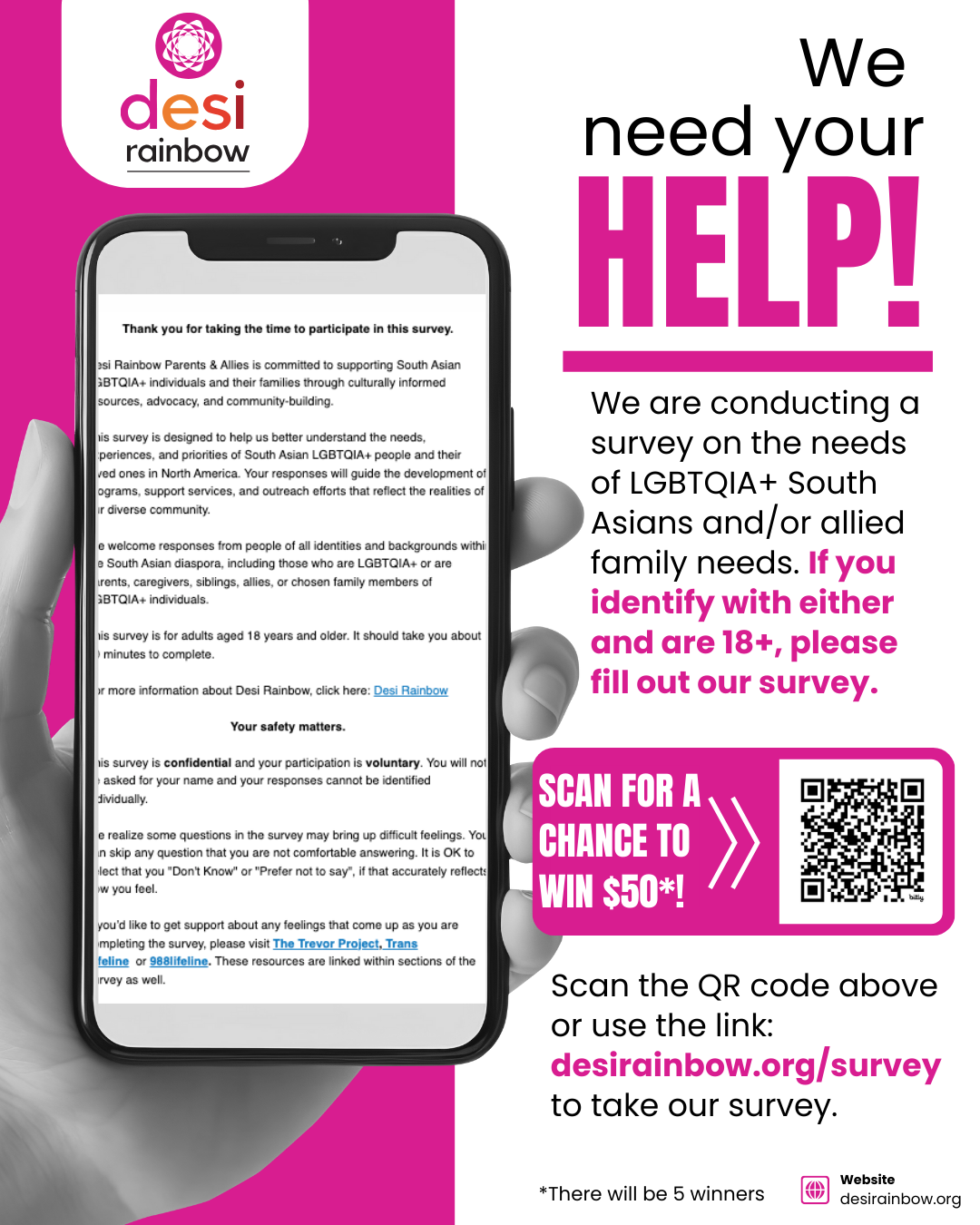
Desi Rainbow is committed to supporting South Asian LGBTQIA+ individuals and their families through culturally informed resources, advocacy, and community-building. They are seeking support to better understand the needs, experiences, and priorities of South Asian LGBTQIA+ people and their family members in North America.
Check out the survey poster below for more information and
take the survey here.
|
|
Social Media, Self-Esteem, and Cultural Perceptions
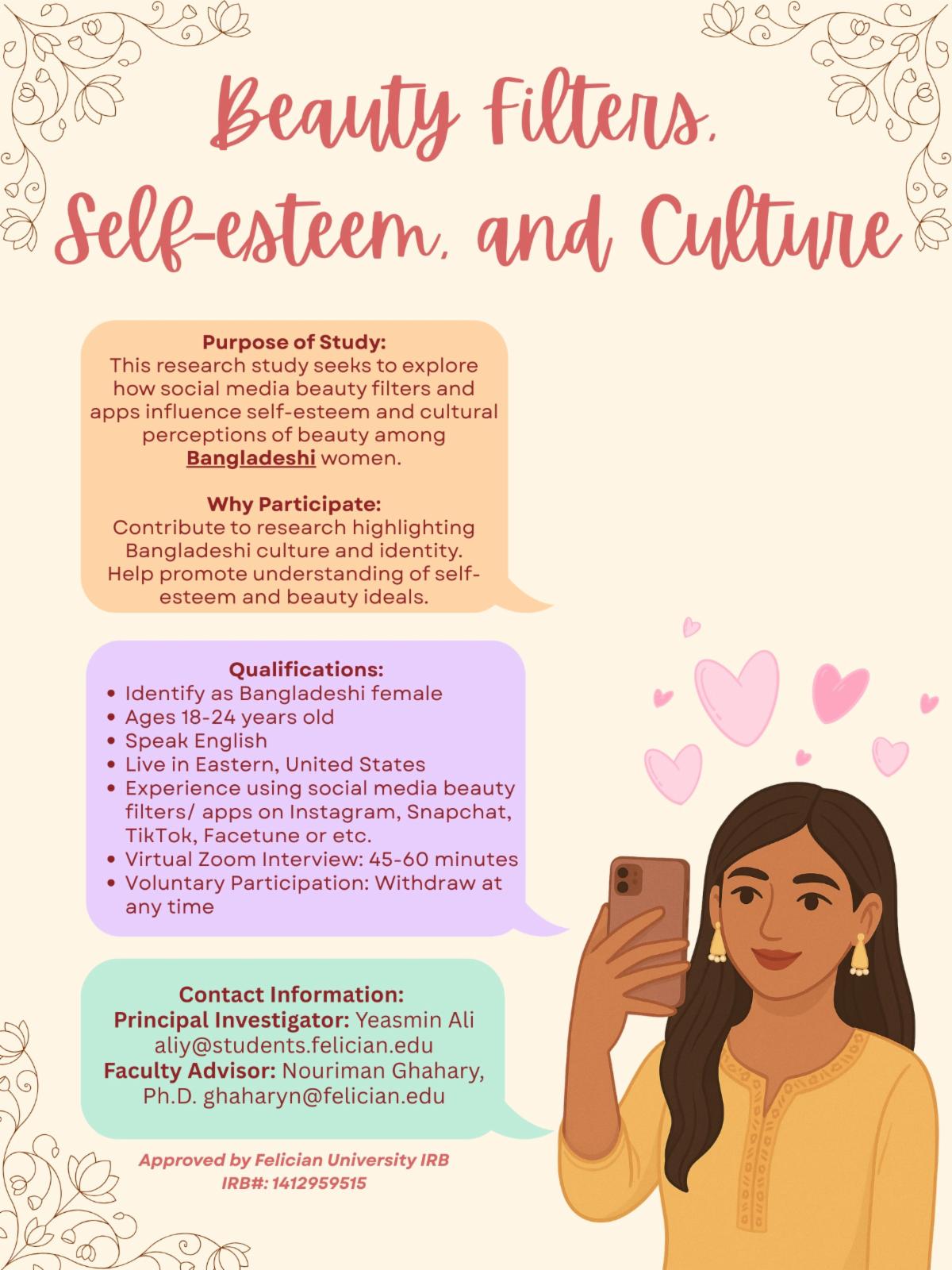
Felician University’s Counseling Psychology program doctoral candidate, Yeasmin Ali, is conducting a qualitative research study exploring how social media beauty filters and apps influence self-esteem and cultural perceptions of beauty among Bangladeshi women.
See the flyer for details and eligibility.
|
|
This study has been reviewed and approved by the Felician University Institutional Review Board (IRB). If interested in participating or would like more information, please contact Yeasmin Ali directly at: aliy@students.felician.edu.
|
|
Social Engagement & Older Adults
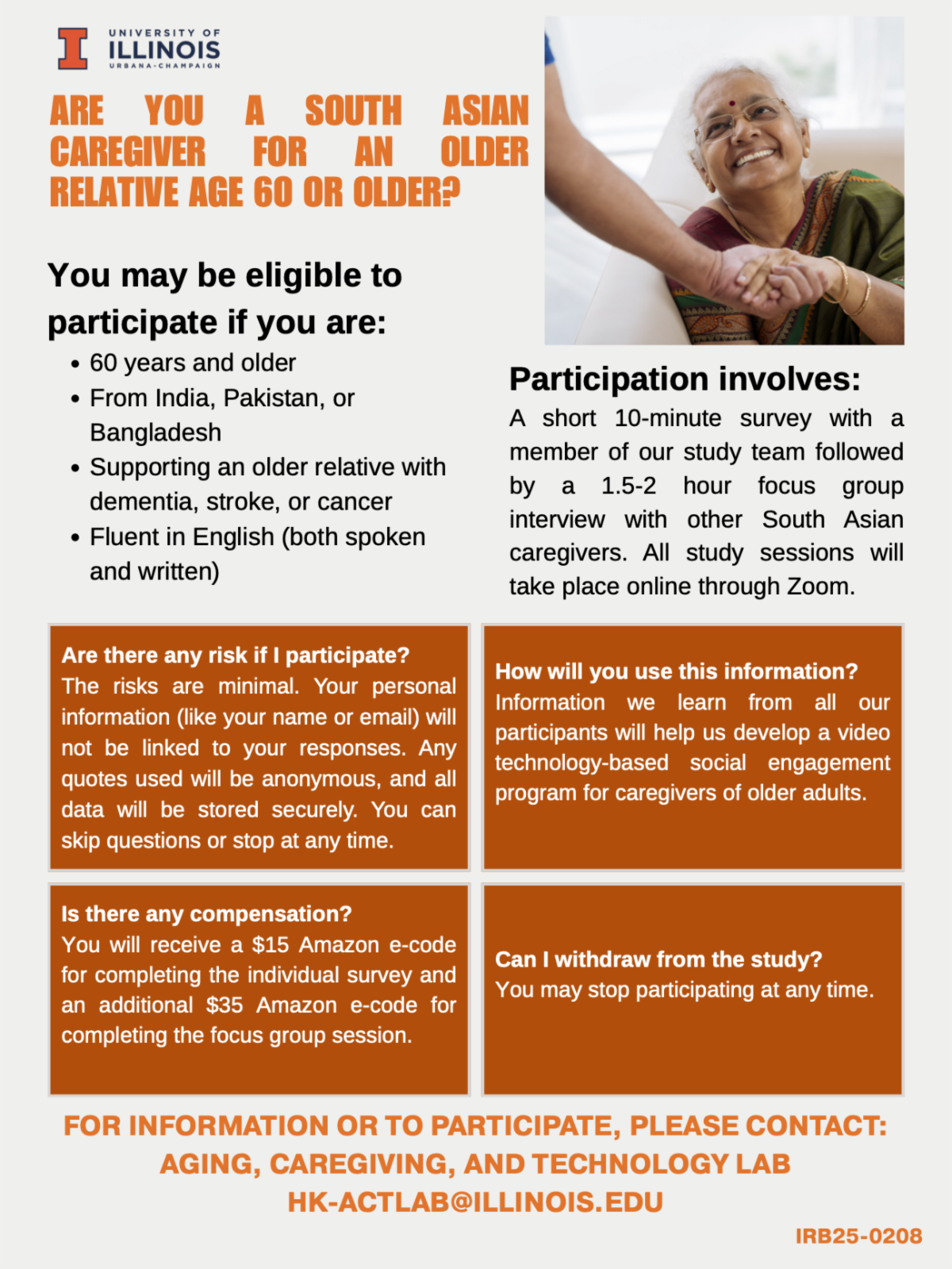
The Aging, Caregiving and Technology Lab of the University of Illinois is recruiting participants to develop a social engagement intervention for older (age 60+) South Asian (Indian, Pakistani, Bangladeshi) caregivers of older relatives with dementia, cancer or stroke.
See the flyer for details and eligibility or email hk-actlab@illinois.edu.
|
|
Mental Health and Well-Being of College Students
Dr. Maya Miyari-Steel, Ph.D, Assistant Professor in the Department of Health Sciences at DePaul University is conducting a study examining how racism-related stress and family cultural influences impact students’ mental well-being.
Eligibility is based on being at least 18 years of age and either a part or full-time college student. Participation includes completing an online survey (approximately 7-12 minutes for completion) with a chance to win a $20 gift card. For more information, you can contact Dr. Miyari-Steel (msteel3@depaul.edu).
|
|
|
On March 25th, the 2026 Asian Pacific American Institute for Congressional Studies (APAICS) Health Summit will air virtually and bring together policymakers, healthcare leaders, researchers, and advocates to tackle urgent issues—from workforce shortages and data equity to health disparities and rising care costs impacting our communities.
Check out SAPHA President, Samira Khan, on one of the panels: “From Guam to Flushing: Mapping Health Disparities Across Our Communities.” Learn more about the panel as well as others and register for the virtual summit here.
|
|
Research Highlights & News
|
|
|
Research suggests South Asian women may face a significantly higher risk of uterine fibroids. The Juggernaut reported on why this condition remains overlooked and underdiscussed in the community, and see the publication, referenced here.
According to data from the MASALA and MESA cohorts, South Asian adults in the U.S. develop heart disease risk factors earlier than other racial and ethnic groups. By age 45, South Asian participants had higher rates of prediabetes, hypertension, and dyslipidemia compared to White, Black, Chinese, and Hispanic adults — despite healthier lifestyle habits overall. Read the publication here.
A new study reveals significant ethnic disparities in trauma exposure and PTSD symptoms among American Muslims, underscoring the need for culturally and contextually informed mental health care. By identifying how trauma experiences differ across ethnic groups, the findings support the development of more equitable, targeted interventions for immigrant and minority communities.
|
|
|
Are you recruiting participants for a study or interested in having your recent publication featured in our newsletter? We’d love to help amplify your work.
To be considered, please email saphaboard@gmail.com with the following:
-
Study recruitment: Submit flyers in .png format
-
Publications: Include a link to the full publication
We look forward to supporting and sharing your research with our community.
|
|
Grow Your Impact This March
|
|
|
If you’ve enjoyed SAPHA’s content and updates, please consider supporting our work this March. Your generosity helps us expand our programs, strengthen outreach, and provide important resources to the communities we serve.
Every gift helps sustain and grow this work. Thank you for being part of the SAPHA community.
✅Donate to expand South Asian public health today
|
|
|
Know someone who might enjoy these newsletters?
Ask them to sign up for our email list here.
|
|
|
Follow us on social media for tips, resources,
and community health updates
|
|
|
|
|