|
April is National Minority Health Month, a time dedicated to raising awareness about the disproportionate burden of illness faced by racial and ethnic minority communities across the United States, and to taking meaningful action in response. At SAPHA, this is not just a month of observance. It is the foundation of why we exist.
Since our founding in 1999, SAPHA has advanced the health and well-being of South Asian communities in the United States through research, advocacy, and education. South Asian Americans remain critically understudied and underserved, with persistent gaps in disaggregated data, culturally competent care, and targeted public health interventions. Closing those gaps is the work we show up for every day.
On the research front, SAPHA has participated as a subawardee on NIH-funded grants, launched our South Asian Research Hub as a living repository of public health literature and resources, and conducted conference presentations, published manuscripts and landmark reports centering South Asian health priorities. We have also developed advocacy toolkits on cardiovascular health, diabetes, interpersonal violence, and more, so that our community has the tools to advocate for itself.
Advocacy is also at the heart of how we show up in national spaces. Last month, SAPHA attended the South Asian Coalition (SAC) National Summit, joining fellow South Asian organizations committed to practicing solidarity through collaboration, policy change, and narrative change for our communities. To learn more about how SAPHA is advancing South Asian health across advocacy, scientific advancement, community leadership, and partnerships, check out our recent National Public Health Week post on LinkedIn.
This April, we invite you to explore our resources, share what you learn, and keep showing up for your communities. The work is ongoing, the need is real, and SAPHA is proud to be in it with you.
|
|
|
Call for Applications: AANHPI Heritage Month Early Career Professionals Spotlight
|
|
|
SAPHA's Research Committee is accepting applications for its AANHPI Heritage Month Early Career Professionals Spotlight! Each May, SAPHA highlights and elevates the work of students, early-career professionals or faculty who are contributing to public health research in South Asian communities.
You are eligible to apply if you are based in the United States and within 5 years of completing your terminal degree. This is a wonderful opportunity to amplify your work and connect with a community of South Asian public health advocates and researchers. You can check out some examples of last year’s highlighted researchers here.
The application deadline is April 30, 2026. Apply here!
|
|
|
APAICS Health Summit Recap
Last month, SAPHA President Samira Khan, MPH had the honor of moderating a powerful panel at the 2026 Asian Pacific American Institute for Congressional Studies (APAICS) Health Summit. The panel, "From Guam to Flushing: Mapping Health Disparities Across Our Communities," brought together leaders from across policy, industry, and community engagement to explore how geography, infrastructure, workforce shortages, and cultural barriers shape health outcomes for Asian American, Native Hawaiian, and Pacific Islander communities.
Alongside panelists Jaspreet Chowdhary of Compassion & Choices, Savine DaCosta of Biogen, and Alice Lin Fabiano of Johnson & Johnson, the conversation tackled some of the most pressing structural challenges facing our communities, from limited access to culturally competent care in rural and underserved areas, to the role of trust in clinical research participation, to the urgent need for disaggregated data that reflects the true diversity of AANHPI communities. The panel also lifted up concrete solutions: community-based participatory research, investment in the health workforce, culturally responsive clinical trial design, and the transformative power of trusted community messengers.
One theme wove through the entire conversation: that lasting change begins not in boardrooms, but in communities, one relationship at a time. As Samira noted in her closing, solutions must be community informed, culturally responsive, and designed with equity at the center so that no community, regardless of where they live, is left behind.
We are proud of Samira's leadership and grateful to APAICS for creating space for these critical conversations. If you missed the panel, you can watch the full recording below and check out the recap on our website.
🎥 Watch the panel recording here
SAPHA’s Work in Vaccine Advocacy
As we observe World Immunization Week this April, we are revisiting a timely conversation SAPHA hosted last October. On October 7, 2025, SAPHA's Advocacy Committee hosted "Be a Vaccine Hero: How Public Health Professionals Can Address Vaccine Hesitancy in the South Asian Community," a virtual webinar led by Baldeep K. Dhaliwal, PhD, MSPH from the Johns Hopkins Berman Institute of Bioethics.
Dr. Dhaliwal reframed vaccine hesitancy not as a knowledge gap, but as a structural and relational issue rooted in colonial medical histories, racism in healthcare, immigration challenges, and language barriers. The webinar offered practical strategies for public health professionals, including leading with listening and empathy, using culturally relevant plain language, partnering with trusted community messengers like faith leaders and multilingual clinicians, and acknowledging past harms while advocating for vaccination as a critical public health tool.
If you missed it, we encourage you to read the full event recap and explore SAPHA's accompanying Vaccine Advocacy Resources, including our Vaccine Myth-Buster Community One Pager and Vaccine Hesitancy Provider Resource Guide.
📖 Read the full event recap here
🎥 Watch the recording here
|
|
|
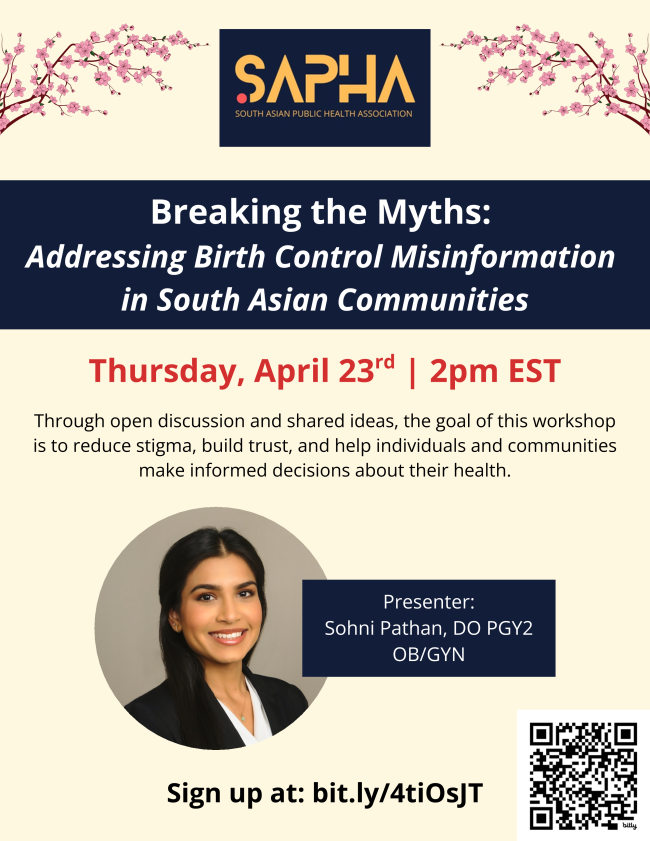
Breaking the Myths: Addressing Birth Control Misinformation in South Asian Communities Thursday, April 23rd | 2:00 PM ET | Virtual
Join SAPHA's Advocacy Committee for our next advocacy workshop, led by Sohni Pathan, DO, a PGY-2 OB/GYN resident at HCA FL Westside/Northwest Medical Center with research interests in minimally invasive surgery, endometriosis, epigenetics, and nutrition.
Misinformation about birth control is widespread in South Asian communities, shaped by cultural stigma, social pressures, and gaps in accessible, culturally relevant health education. This workshop will explore the cultural and social factors that fuel misinformation, debunk common myths about birth control and reproductive health, and offer practical tools for sharing accurate information with your communities. The session is open to healthcare professionals, students, community leaders, and anyone interested in learning more about this important and often misunderstood topic.
Register now at bit.ly/4tiOsJT
|
|
|
AAARI 2026 Symposium – “The New Asian NYC: Mobilization, Grassroots Power, and Pluralistic Futures” Friday, May 15th | 8 AM - 5 PM ET | BMCC (CUNY) Fiterman Hall
This full-day symposium hosted by the Asian American and Asian Research Institute at CUNY explores what the historic 2025 NYC mayoral election reveals about Asian American political power, grassroots organizing, and civic identity. Sessions will cover topics including caste solidarity, anti-South Asian racism, immigration policy, heritage language and identity, and the role of arts in community building. SAPHA Board Secretary Rubana Hossain, MPH will be among the speakers.
Register now at http://bit.ly/4cDkg50
|
|
|
National Language Access Month
The South Asian Public Health Association (SAPHA) is proud to endorse a congressional resolution introduced to recognize April as National Language Access Month, led by Representative Judy Chu and representatives across the Congressional Asian Pacific American Caucus (CAPAC) and Congressional Hispanic Caucus. Language access is a critical driver of health equity, Nearly 28% of Asian Americans have limited English proficiency (LEP), which is one of the highest rates of any racial group, and this need is especially pronounced within South Asian communities, where some populations experience even higher rates, including 63.7% of Bhutanese and 44.2% of Bangladeshi Americans reporting LEP. South Asian languages such as Bengali, Hindi, Urdu, Gujarati, Punjabi and Nepali are also among the most commonly spoken languages among individuals with LEP in the U.S., underscoring the need for culturally and linguistically appropriate care. The introduction of this resolution is especially important because it elevates language access as a national priority and helps drive the awareness, policy attention, and cross-sector action needed to ensure individuals with LEP can access safe, high-quality healthcare and essential services. Language barriers can hinder effective communication between patients and healthcare providers, increase challenges in navigating healthcare systems, and contribute to delays in diagnosis and treatment, all of which can contribute to poorer health outcomes. As we recognize National Language Access Month, SAPHA reaffirms its commitment to advancing policies and practices that ensure all communities can access high-quality, equitable care.
|
|
AANHPI Equal Pay Day
April 9th marked AANHPI Equal Pay Day, the day in the new year when the average AANHPI woman's earnings finally catch up to what non-Hispanic white men made the year before. It is a sobering reminder that pay inequity is not just an economic issue. It is a public health issue, one with real consequences for housing stability, food security, healthcare access, and overall well-being.
Economic justice and health equity are deeply intertwined, and SAPHA has been proud to engage this connection directly. Last May, SAPHA hosted "The Hidden Costs of the Model Minority Myth: Advocating for Economic Justice in South Asian Communities," an advocacy workshop led by Sydelle Barreto, MA, Policy Manager at NAPAWF. The workshop explored how the model minority myth obscures real and significant economic disparities within South Asian subgroups, how factors like immigration status, education, and identity shape economic mobility and health outcomes, and how individuals and organizations can advocate for policy reform that strengthens community health. SAPHA Board Members and Advocacy Co-Chairs Nawal Umar, MPH and Anmol Sharma, MGH helped facilitate.
If you missed it, you can watch the workshop recording here and read the full event recap on our website. Economic justice is health justice, and this conversation is as urgent as ever.
|
|
|
Malinee Neelamegam, PhD, MPH, CPH
SAPHA BOD Treasurer
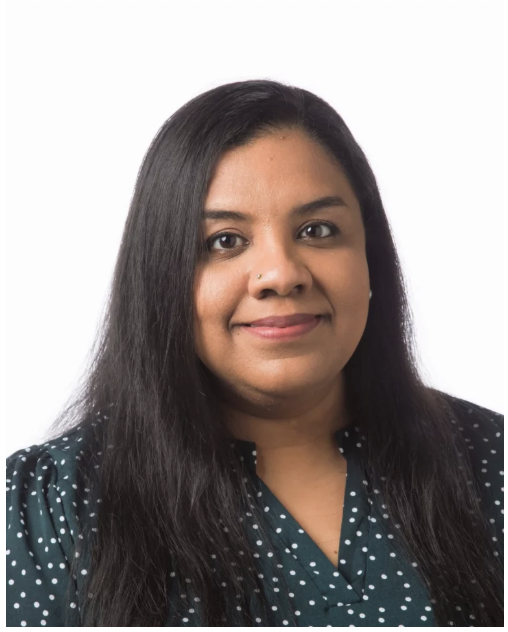
We are thrilled to congratulate SAPHA Treasurer Malinee Neelamegam, PhD, MPH, CPH on being named the 2026 recipient of the Society for Epidemiologic Research's Sherman A. James Diverse and Inclusive Epidemiology Award!
Dr. Neelamegam is an epidemiologist and Assistant Professor at the UNT Health Science Center School of Public Health in Fort Worth, Texas, whose research focuses on aging, social determinants of health, and the adverse life experiences that shape health trajectories in communities facing disparities. As a member of the South Asian diaspora who grew up in Malaysia, she brings a deeply personal commitment to understanding aging among South Asian immigrant populations. This award is a well-deserved recognition of her dedication to diversity, inclusion, and health equity in epidemiologic research.
We are so proud to have Dr. Neelamegam on the SAPHA board and grateful for everything she contributes to our mission. Congratulations, Malinee!
Read more about the award at UNT Health Fort Worth Newsroom.
|
|
|
Dr. Nitasha Nagaraj, DrPH, MPH
Former SAPHA President; SAWRI Project Director
We are also proud to uplift the work of past SAPHA President Dr. Nitasha Nagaraj, DrPH, MPH, who serves as Project Director of the recently launched South Asian Women's Research Initiative (SAWRI) at the GW Center of Excellence in Maternal and Child Health, Milken Institute School of Public Health.
SAWRI advances health equity and well-being for South Asian women in the United States through community-engaged research, dissemination, mentorship, and culturally grounded evaluation. The initiative centers the lived experiences of South Asian women to generate evidence that informs public health practice, policy, and education, spanning research areas including reproductive and gynecologic health, intimate partner violence, chronic disease, mental health, and storytelling for social change.
Learn more and explore opportunities to collaborate, or reach out directly to Dr. Nagaraj at nitasha@gwu.edu.
|
|
Community Spotlight: "We Are Family" Peer Support Circle
|
|
|
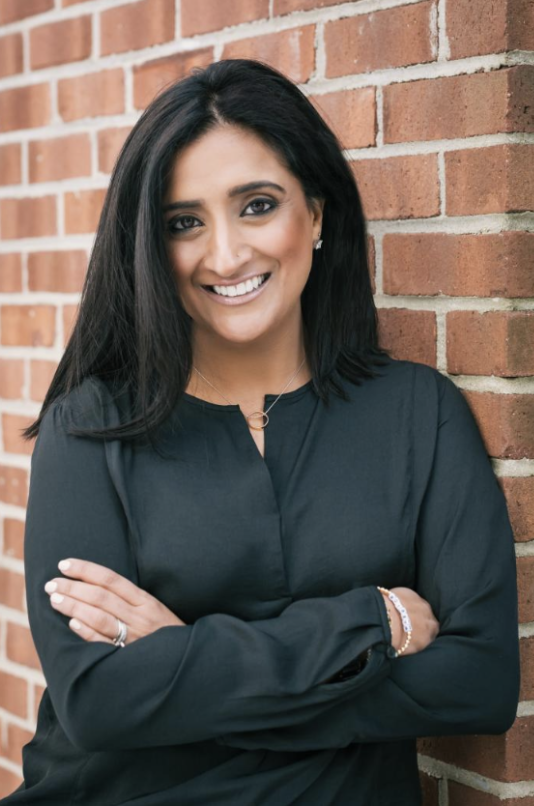
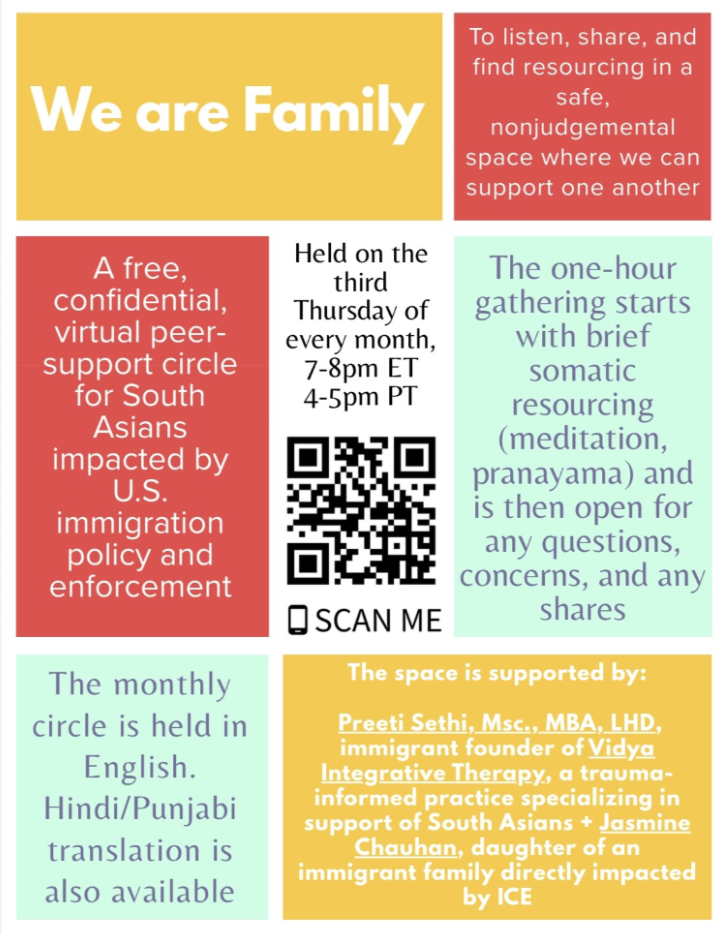
Navigating the uncertainty of immigration policy can take a profound toll on mental and emotional wellbeing, and no one should have to face that alone. "We Are Family" is a free, confidential, virtual peer support circle for South Asians impacted by U.S. immigration policy and enforcement. Held on the third Thursday of every month from 7–8 PM ET / 4–5 PM PT, the circle offers a safe, nonjudgmental space to listen, reflect, and find community. Each gathering opens with brief somatic resourcing, including meditation and pranayama, before opening the floor for questions, concerns, and shared experiences.
The circle is co-facilitated by Jasmine Chauhan, the Punjabi daughter of a family member directly impacted by ICE, and Preeti Sethi, Msc., MBA, LHD, immigrant founder of Vidya Integrative Therapy, a trauma-informed practice specializing in support for South Asians, immigrants, and refugees. Preeti also offers integrative therapy on a sliding scale, with pro bono support available to those directly impacted by ICE. Learn more at preetisimransethi.com/therapy.
For additional resources on the mental health impact of immigration enforcement on Asian Americans, including guides on ICE encounters and family preparedness, visit Preeti's ongoing series at MindSite News.
Questions? Email vidyaintegrative@proton.me.
|
|
South Asian Health Research Hub Caste 101 Webinar Recap
Last month, the Poetic Justice Foundation, in collaboration with the South Asian Health Research Hub (SARH), hosted a webinar examining caste as a structural determinant of South Asian health. For those who were unable to attend, a recording of the webinar is now available. We encourage our community to watch, share, and continue engaging with this important topic.
🎥 Watch the Caste 101 webinar recording
The organizers also shared the following resources for further learning. "Caste in the United States", produced by Equality Labs, is the first comprehensive survey documenting caste discrimination among South Asian Americans, covering experiences in the workplace, education, and beyond. SAPHA's own "Caste is a Public Health Issue" report frames caste as a structural driver of health inequity in our communities. "Caste Privilege 101: A Primer for the Privileged" offers an accessible entry point for those newer to understanding caste and their relationship to it.
For deeper reading, the organizers also recommended three books. "The Trauma of Caste" by Thenmozhi Soundararajan, founder of Equality Labs, is a Dalit feminist meditation on survivorship, healing, and abolition that weaves personal memoir with political history and practical tools for change. "Debrahmanising History" by Braj Ranjan Mani examines how dominant-caste perspectives have shaped historical narratives in South Asia and makes the case for a more just, inclusive telling of that history. "Caste Matters" by Suraj Yengde, a Harvard scholar and Dalit activist, explores how caste operates across Indian society and the diaspora, drawing on personal experience and rigorous analysis.
For questions, reach out to the South Asian Health Research Hub at admin@sahrh.org or the Poetic Justice Foundation at admin@poeticjustice.foundation.
|
|
Research Highlights & News
|
|
|
Immigration Policy and Health Outcomes
A new study published in the Journal of Immigrant and Minority Health finds that exclusionary immigration policy experiences are significantly linked to worse health outcomes among Asian and Latino immigrants. Each additional recent exclusionary experience, such as knowing someone who was deported, being racially profiled, or being denied health insurance, was associated with 40% higher odds of delaying care, 21% lower odds of better self-rated health, and 24% higher odds of mental illness. The findings underscore the urgent public health consequences of immigration enforcement for our communities. Read the publication here.
Closing the Gap in South Asian Genomic Research
A new digital genomic study, the OurHealth Study, is working to address a longstanding gap in South Asian health research. South Asians experience disproportionately elevated cardiometabolic disease risk yet remain underrepresented in genomic research. The OurHealth Study builds a digital biobank of US South Asian adults, integrating remote surveys, mailed biospecimens, and electronic health record sharing to identify genetic and non-genetic drivers of cardiometabolic disease. By pairing remote participation with culturally tailored outreach, the study aims to make genomic research more accessible and representative. Read the publication in npj Digital Medicine here.
Research Gaps in South Asian Migrant and Refugee Health
A new evidence gap map published in BMJ Global Health highlights how much remains unknown about the health needs of South Asian migrants and refugees. Researchers analyzed 129 studies published from 2000 to 2025 and found a clear lack of evidence around interventions to improve existing health status, access to health services, and healthcare seeking behaviors, underscoring an urgent need for increased and targeted funding to address these research gaps. Read more here.
|
Surveys & Voluntary Study Participation
|
|
Childhood Asthma Management in DC
Ryanna Quazi, an MPH candidate at the George Washington University Milken Institute School of Public Health, is recruiting participants for her thesis research on how families in Washington, DC manage childhood asthma at home.
You may be eligible if you are 18 or older, currently live in Washington, DC, and have a child under 18 with asthma. Participation involves a single 45-minute conversation, either in person or over Zoom, and is completely voluntary. Your responses will remain private and your name will not appear in any reports. This study has been reviewed and approved by the GWU Institutional Review Board (IRB # NCR267245).
To check your eligibility, please fill out this short Participant Eligibility Form. For questions, contact Ryanna directly at rquazi58@gwu.edu.
Bilingual AUD Survey for Punjabi-American Communities
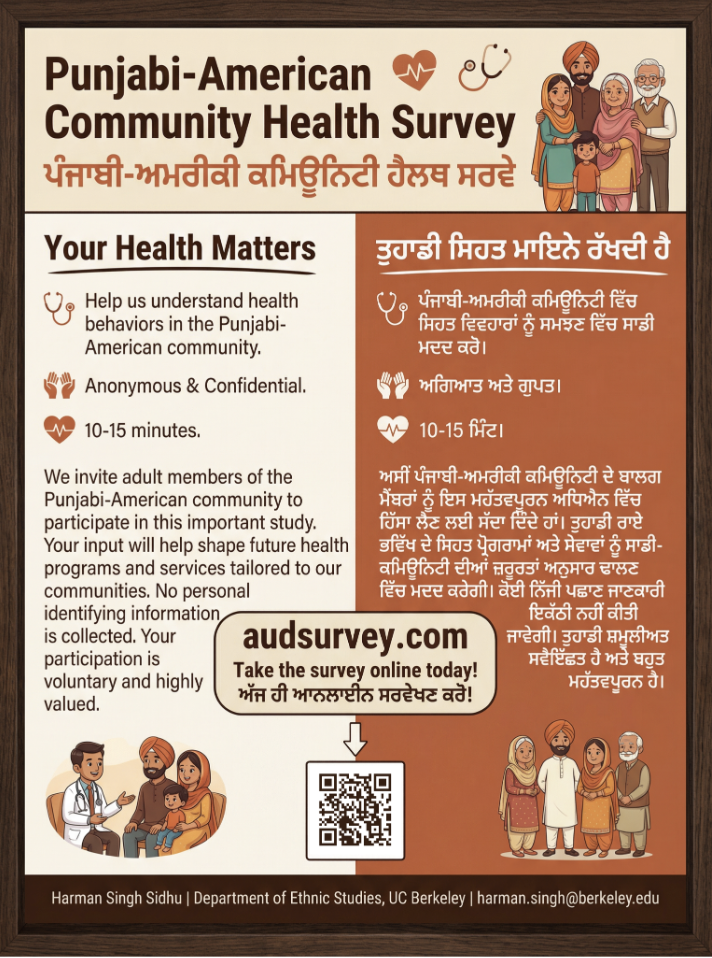
Harman Singh Sidhu, a researcher in the Department of Ethnic Studies at UC Berkeley, is conducting a bilingual survey examining alcohol use disorder patterns, acculturation, and treatment attitudes among Punjabi Americans. The survey is available in both English and Punjabi (Gurmukhi), uses validated research tools, and is completely anonymous.
Substance use remains significantly under-researched in South Asian communities due to cultural stigma, and this study aims to generate the kind of disaggregated, community-specific data our communities need. Your participation can help build the evidence base for more equitable, culturally informed care.
Take the survey at audsurvey.com. For questions, contact Harman Singh Sidhu at harman.singh@berkeley.edu.
|
|
CHAI-Lingual Lab
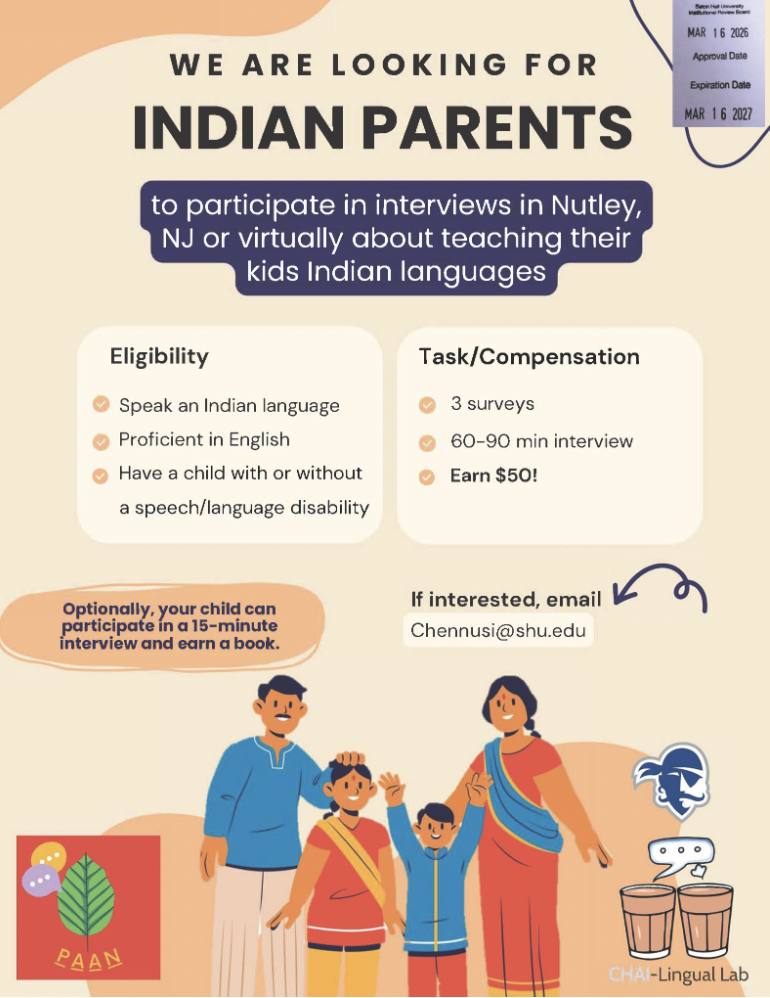
Sindhu Chennusi, speech-language pathology professor at Seton Hall University and principal investigator of the CHAI-Lingual Lab, is recruiting Indian parents for a research study on how families teach their children their heritage languages. The study focuses on developing culturally responsive language interventions for South Asian and other diverse communities.
Participation involves a virtual interview and is open to Indian parents. Parents who participate will receive $50, and children may optionally participate and receive a children's book.
For more information or to participate, contact Sindhu Chennusi at chennusi@shu.edu.
|
|
|
Are you recruiting participants for a study or interested in having your recent publication featured in our newsletter? We’d love to help amplify your work.
To be considered, please email saphaboard@gmail.com with the following:
-
Study recruitment: Submit flyers in .png format
-
Publications: Include a link to the full publication
We look forward to supporting and sharing your research with our community.
|
|
Support the Work That Matters
|
|
|
National Public Health Week reminded us that advancing health equity takes sustained, collective effort. From advocacy and coalition building to community education and research partnerships, SAPHA's work to improve South Asian health happens year-round and your support makes it possible.
Every gift helps us expand our programs, deepen our community reach, and ensure South Asian voices remain centered in the national public health conversation. To learn more about the breadth of work your donation supports, check out our recent National Public Health Week post on LinkedIn.
✅ Donate to expand South Asian public health today
|
|
|
Know someone who might enjoy these newsletters?
Ask them to sign up for our email list here.
|
|
|
Follow us on social media for tips, resources,
and community health updates
|
|
|
|
|