|
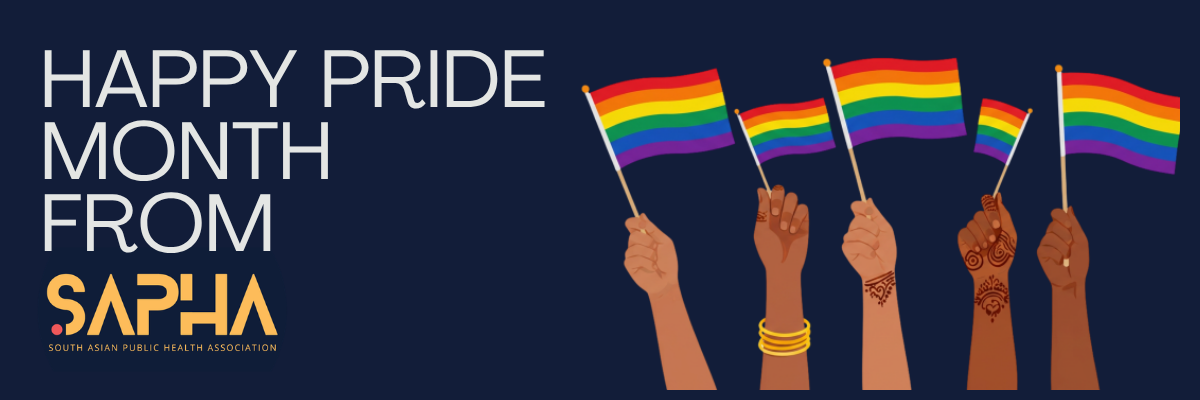
June is Pride Month: a time to celebrate the LGBTQIA+ community and recommit to building a world where everyone, regardless of who they love or how they identify, can access the health, safety, and belonging they deserve. At SAPHA, that commitment extends to a group too often overlooked in both mainstream LGBTQIA+ spaces and our own South Asian communities: queer and trans South Asians.
Data on the health of queer and trans South Asians in the US remains scarce. A 2006 needs assessment by South Asian Network and Satrang in Southern California found high levels of prejudice and discrimination within both South Asian and broader LGBTQIA+ spaces, alongside high rates of mental distress and limited healthcare use. Nearly two decades later, comprehensive, up-to-date research is still largely absent.
In the absence of robust data and institutional support, community has stepped in. Across the country, volunteer-run organizations are promoting social connection, mental health, and safety for queer and trans South Asians through grassroots networks, peer support spaces, and culturally specific programming built by community members out of necessity and love.
SAPHA has compiled a list of these national and regional organizations on our LGBTQIA+ Health Resources page, including peer support helplines, regional social and advocacy groups, and community collectives spanning cities from Boston to the Bay Area. Whether you are looking for community yourself, supporting a loved one, or seeking to better understand the experiences of queer and trans South Asians, we encourage you to explore these resources.
This Pride Month, SAPHA reaffirms that South Asian health equity must include all South Asians. We are grateful to the organizers, helpline volunteers, and community builders who have created spaces of safety and celebration where institutions have fallen short, and we remain committed to amplifying their work and advocating for the research and resources our queer and trans South Asian community members deserve.
|
|
|
Honoring Juneteenth
Solidarity, Joy, and Collective Liberation
Juneteenth commemorates the end of slavery in the United States and celebrating Black freedom, resilience, and joy. As a South Asian public health organization, we recognize that our liberation is bound up with the liberation of Black communities, and that meaningful solidarity requires us to actively confront anti-Blackness within our own communities rather than express support from a distance.
Too often, conversations about Black communities center solely on struggle. Those realities are real and important, but they are not the whole story. This Juneteenth, we want to lift up Black joy alongside Black resilience: the celebration, creativity, and connection that exist independent of hardship and deserve to be honored on their own terms. We encourage our community to explore the Smithsonian National Museum of African American History and Culture's piece on Black Joy: Resistance, Resilience, and Reclamation, as well as Why Black Joy Is Important, According to 10 Young People, which centers youth voices on what joy means in their own words.
We also want to highlight the often under-told history of solidarity between South Asian and Black communities. Black Desi Secret History documents this shared history of organizing and connection across generations. In Chicago, the South Asian Solidarity Movement has partnered with Healthy Hood Chi to directly confront anti-Blackness within South Asian communities, an example covered by the Chicago Defender. For those interested in the research and analysis behind these movements, we recommend Model Minority Allies or Comrades in Solidarity?, an academic examination of South Asian American activism during the summer of 2020.
Genuine solidarity is ongoing work, not a single gesture. This Juneteenth, we invite our community to learn, reflect, and recommit to standing with Black communities in the fight for collective liberation.
|
|
|
In recognition of Maternal Mental Health Awareness month in May, SAPHA shared a post on our social media platforms to honor Mental Health Awareness Week (May 4-10). In our post, we highlighted a blogpost by Postpartum Support International. The blogpost cites several research articles which delve into the maternal mental health of South Asian women (both native-born and immigrant). Among those, the blogpost references a 2026 systematic review, describing the prevalence of perinatal depression among women in South Asian countries as well as postpartum depression among South Asian women who migrated to high-income countries. In our post, we also highlighted the main drivers for these increased risks that the article mentions, including the reverence that motherhood is given in South Asian culture versus the lack of support for mothers, putting more focus and importance on the child’s wellbeing.
In addition to this blogpost, we wanted to highlight another systematic review - the first to focus on South (and East) Asian immigrant women in OECD countries. The review examined the prevalence of mental health conditions and experiences with perinatal mental health services among South (and East) Asian immigrant women in Canada, the UK, the US, Australia, and New Zealand. Findings from this review indicate that although South and East Asians make up about 29% of immigrants in OECD countries, mental healthcare gaps and issues exist. In particular, five themes emerged around the challenges South Asian women face regarding maternity care: ethnocultural and religious differences, communication and language barriers, understanding different medical systems, the impact of migration, and navigating cross-cultural maternity care experiences. A study in this review noted that in 2020, the prevalence of antenatal depression was 43.3% and anxiety was 45.3% among South Asian women in the UK. The systematic review notes that its findings apply to pre-COVID conditions and that pandemic related stressors likely intensified vulnerabilities and risk South Asian immigrant pregnant women face, requiring separate study, especially since immigrant and minority ethnic women reported worse mental health outcomes in OECD countries during the pandemic. We encourage you to follow the link above to read further about these findings and the gaps in research when it comes to South Asian maternal mental health.
|
|
|
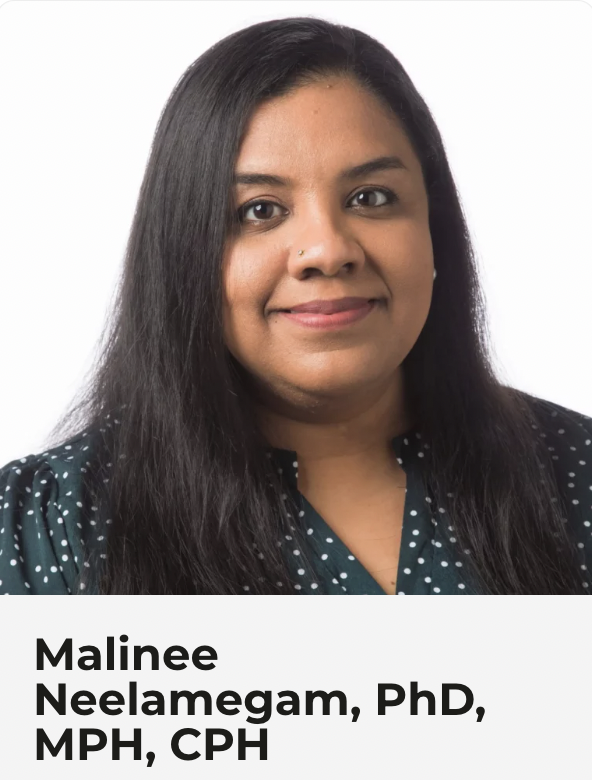
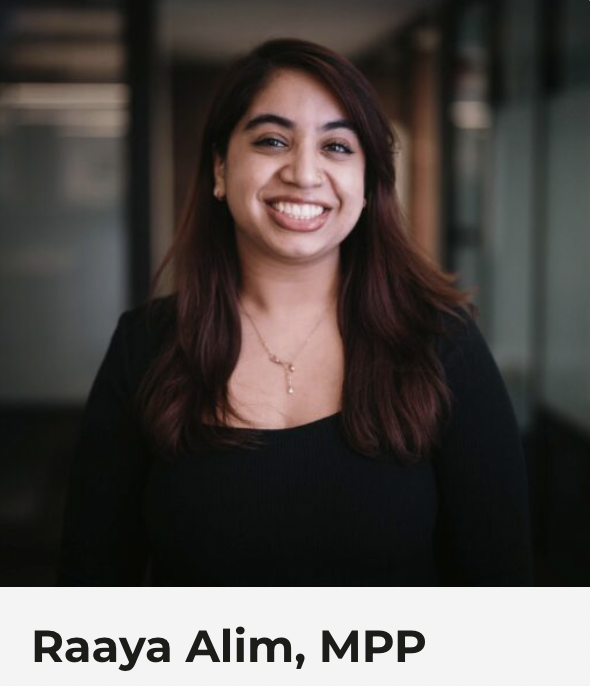
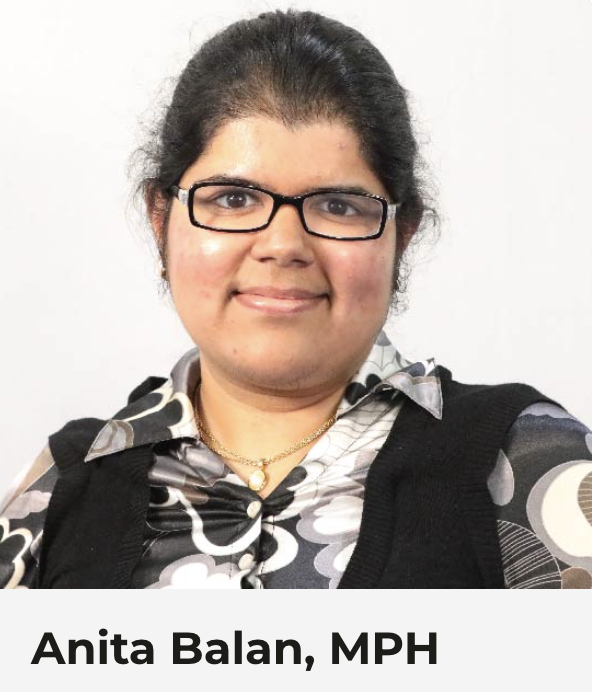
We extend our heartfelt thanks to Dr. Malinee Neelamegam for her dedicated service as SAPHA Treasurer and to Anmol Sharma for her leadership as Advocacy Committee Co-Chair. Their time, commitment, and contributions have helped strengthen our organization, and we are deeply grateful for their service. We are also pleased to congratulate Anita Balan on her appointment as SAPHA Treasurer and warmly welcome Raaya Alim as our new Advocacy Committee Co-Chair. Raaya brings extensive experience in health policy, advocacy, and health equity, and we look forward to the leadership and expertise she will bring to the Board alongside Anita.
|
|
|
Asian American / Asian Research Institute (AAARI) 2026 Symposium
For the Asian American / Asian Research Institute (AAARI) 2026 Symposium, The New Asian NYC: Mobilization, Grassroots Power & Pluralistic Futures, Sheikh Rubana Hossain, MPH, Board Secretary of the South Asian Public Health Association (SAPHA), presented "Digital Hate and Systemic Barriers: Navigating the Surge of Anti-South Asian Racism." The session examined the growing rise of online and systemic anti-South Asian hate and its implications for public health and community well-being. Emphasizing trauma-informed and community-centered approaches, the presentation explored strategies for equitable engagement, addressing structural barriers, and strengthening cross-community solidarity to support safer, more inclusive environments for South Asian communities.
Learn more here and see an event recap here.
|
|
|
AcademyHealth Conference
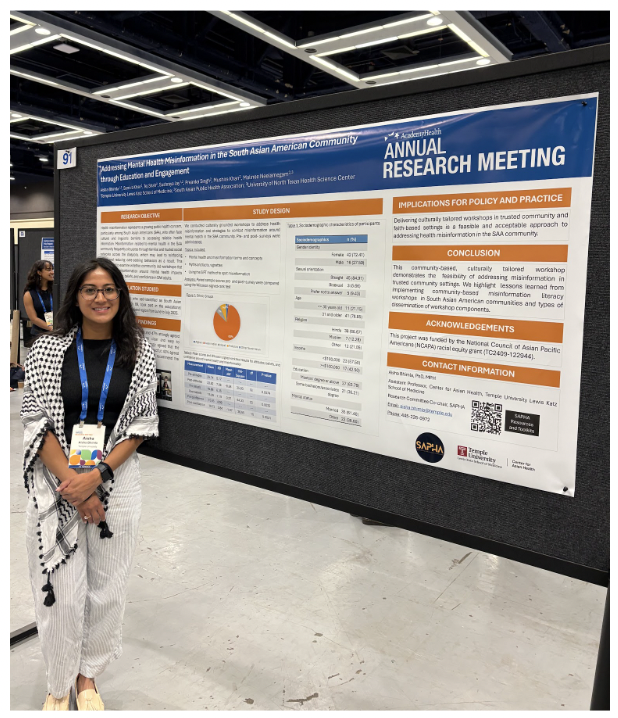
SAPHA shared findings from an NCAPA-funded project that conducted culturally tailored mental health misinformation workshops with South Asian American adults in the Washington, D.C. area. Results showed that following the workshops, there were improvements in mental health attitudes, beliefs, and confidence in accessing mental health resources. The presentation highlighted promising strategies for delivering community-led health misinformation interventions in trusted, community-based settings. This was presented at the AcademyHealth Annual Research Meeting by Aisha Bhimla.
|
|
|
Spotlight Series Season 2 Episode 2: Dr Sunanda Gaur
Coming Next Week: Episode 2 of the SAPHA Spotlight Series Season 2 features Dr. Sunanda Gaur, Professor of Pediatrics at Rutgers Robert Wood Johnson Medical School and Founding Director of the South Asian Total Health Initiative (SATHI). Join us next week as we explore her remarkable career spanning the HIV and COVID-19 pandemics, the origins and impact of SATHI, and her vision for advancing health equity and improving the health of South Asian communities across the United States. Keep an eye out for the release!
APAICS Women's Collective Summit Arlington, VA | Thursday, August 6, 2026
The APAICS Women's Collective Summit builds community and political engagement among Asian American and Native Hawaiian/Pacific Islander women. The Women's Collective works to uplift AA & NH/PI women's representation in public service, lead the national conversation on their political participation, and connect leaders and stakeholders across the country.
Register and learn more on the Summit page.
|
|
|
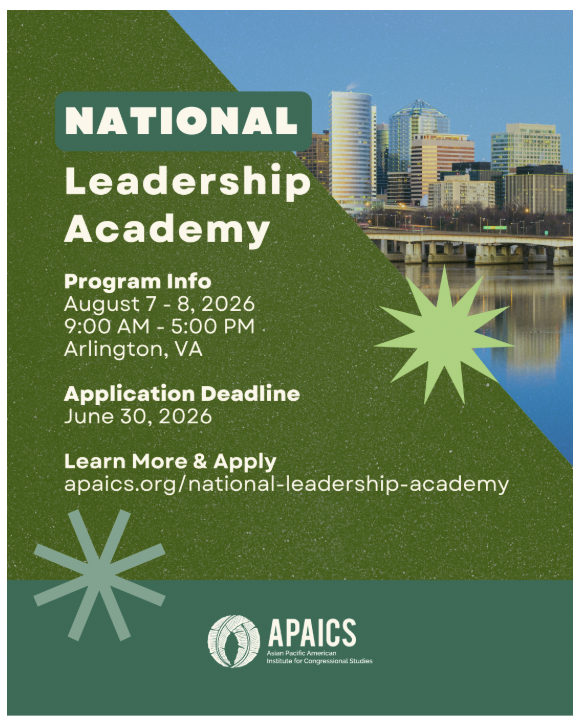
APAICS National Leadership Academy Arlington, VA | August 7–8, 2026 | Application Deadline: June 30, 2026
The Asian Pacific American Institute for Congressional Studies (APAICS) is hosting its National Leadership Academy (NLA), a two-day leadership training designed to demystify the process of running for office. The program offers current elected officials, prospective candidates, and community stakeholders hands-on training in campaign planning, communications, digital organizing, power mapping, volunteer recruitment, and fundraising.
Apply by June 30 at bit.ly/2026-NLA. Learn more at bit.ly/apaics-nla or by emailing programs@apaics.org.
|
|
|
Call to Action: Oppose OMB's Proposed Changes to Federal Grant-Making
The White House Office of Management and Budget has proposed sweeping changes to how federal grants are awarded, changes that pose a serious threat to evidence-based public health research, including research that serves South Asian communities. The proposal would allow political appointees to make grant award decisions based on ideology rather than scientific merit, and would permit the administration to cancel, suspend, or modify grant awards at any time, even after they have been issued. It would also block federal funding for programs related to diversity, equity, and inclusion, "gender ideology," or immigration status, despite many of these programs having already been upheld in federal courts.
For a community like ours, where research is chronically underfunded and disaggregated data remains scarce, these changes would be devastating. Programs that study health disparities, fund community-engaged research, or serve immigrant and LGBTQIA+ communities could be defunded not because the science is flawed, but because of who they serve.
The public comment period is open now and closes July 13, 2026. We urge our community to make your voice heard. You can submit your comment to OMB using APHA's editable message, and we encourage you to share how this proposal would personally impact you, your work, and your community. Specific, personal comments carry real weight in this process.
SAPHA Signs On: Open Letter on South Asian Solidarity
SAPHA is proud to have joined a coalition of 36 organizations in signing an Open Letter on South Asian Solidarity, led by Asian Americans Advancing Justice | AAJC, rejecting anti-immigrant hate and standing with South Asian, Sikh, Muslim, Hindu, Jain, Buddhist, and immigrant communities.
The letter comes in response to a troubling rise in targeted attacks against South Asian communities, amid rhetoric from public figures and officials that has stoked fear and scapegoating against Sikhs and other immigrant communities in the United States. The coalition, spanning civil rights, faith, immigrant rights, advocacy, and community organizations, affirms a shared commitment to rejecting efforts to divide our communities through fear and collective blame, and to upholding the safety, dignity, and belonging of all people.
Hate and xenophobia are not just civil rights concerns. They are public health concerns, with documented impacts on community mental health, safety, and access to care. We encourage our community to read the full letter and help amplify this message of solidarity through your own networks.
📄 Read the Open Letter on South Asian Solidarity
|
|
|
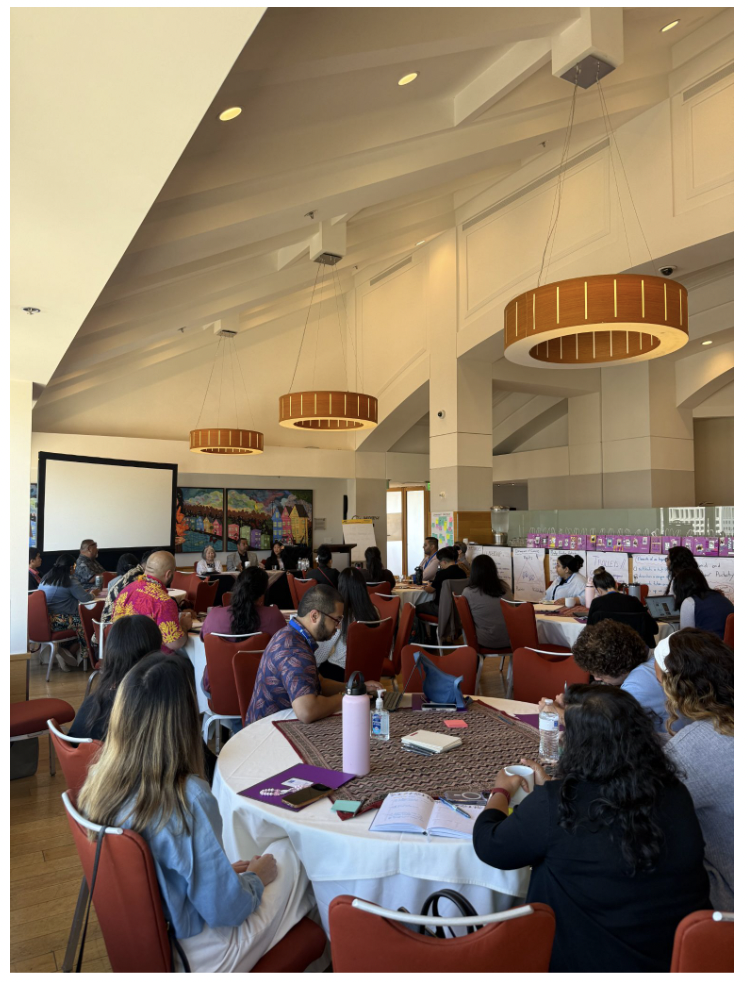
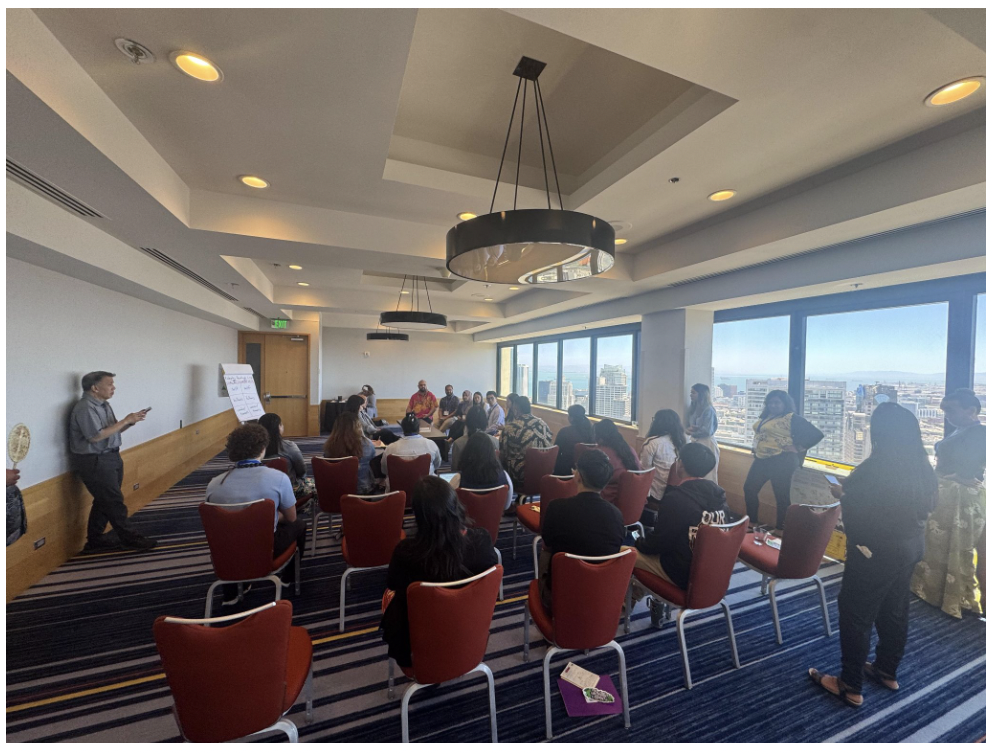
This month we are featuring Asian Pacific Partners for Empowerment, Advocacy and Leadership (APPEAL), a health justice organization working to achieve health equity for Asian Americans, Native Hawaiians and Pacific Islanders. Founded and established in 1994 by executive director Rod Lew, APPEAL is widely recognized as one of the leading national organizations focused on commercial tobacco control with further expansion into cancer prevention and health equity. Over 30 years, APPEAL has developed and implemented a wide array of leadership trainings, educational resources, programs, networking opportunities, and coalitions.
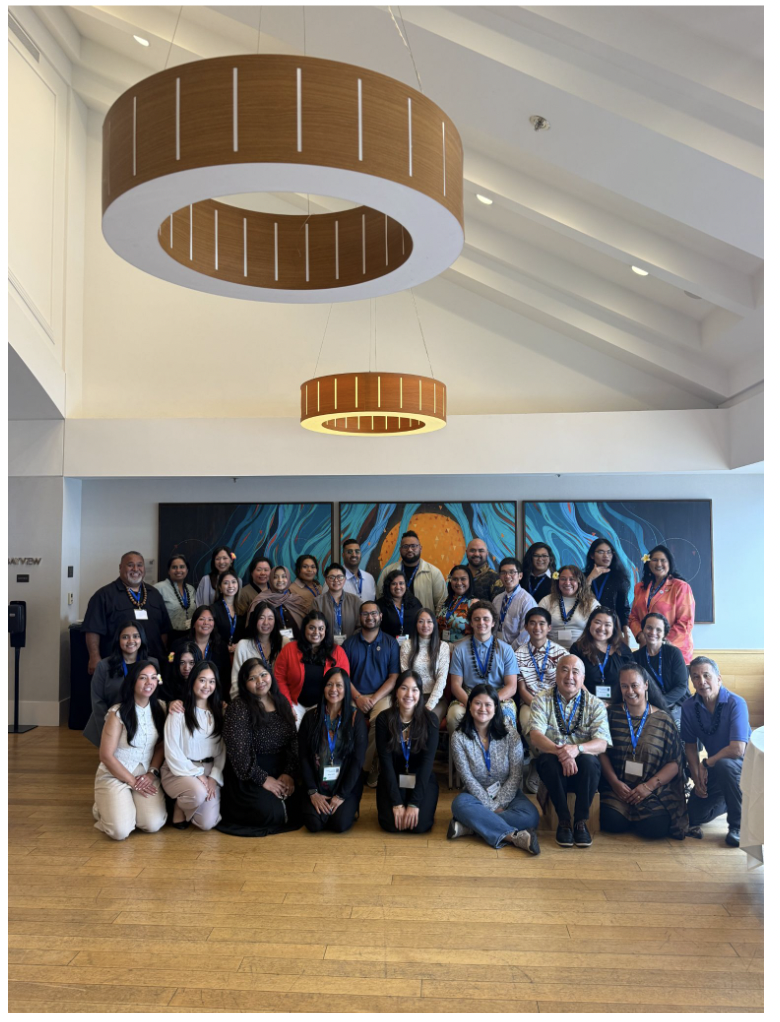
Most recently, two members of SAPHA (Sushraya Jay and Amish Doshi) were selected to attend APPEAL’s 2026 National Fellowship Leadership Training and Policy Summit in San Francisco. Over four days, fellows had the opportunity to meet one another and engage, through presentations and support from expert panelists, trainers and coaches, in deeply reflective individual and group activities focusing on advocacy, collaboration, systems navigation, community organizing/mobilizing, and policy development. APPEAL has trained more than a thousand leaders including several former and current SAPHA board and committee members.
You can follow APPEAL by checking them out on X (formerly Twitter), Instagram, YouTube, LinkedIn, and Facebook.
|
|
Surveys & Voluntary Study Participation
|
|
|
Join the CARE 2.0 Study: Make your voice count in health research!
SAPHA is partnering with researchers at the University of California, San Francisco (UCSF) and California State University, East Bay (CSUEB) to recruit South Asian participants for the Collaborative Approach for Asian Americans, Native Hawaiians, and Pacific Islanders Research and Education (CARE) 2.0 study, an NIH-funded research initiative that aims to create a national repository of Asian American, Native Hawaiian, and Pacific Islander individuals who may be contacted about future research on Alzheimer's disease and related dementias, aging, caregiving, and other health topics across the lifespan.
We are specifically seeking to increase South Asian representation in this important national research effort. South Asians have historically been underrepresented in health research, limiting our understanding of the unique factors that shape health and aging within our communities. By participating in studies like CARE 2.0, community members can help ensure that future research, prevention strategies, and healthcare interventions are informed by the experiences and needs of South Asians. To participate through SAPHA's unique recruitment link, please visit: https://tinyurl.com/SAPHACARE
If you are interested in helping host a recruitment event with your organization, you can email us here: partnership@sapha.org
|
|
FOCUS Project: Service Providers Working with South Asian Families
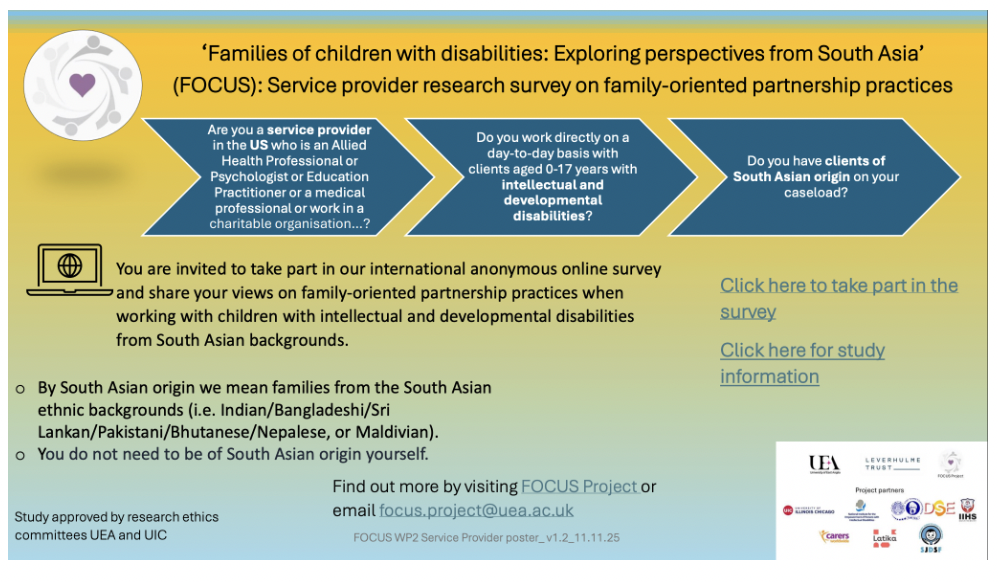
The FOCUS Project, "Families of Children with Disabilities: Exploring Perspectives from South Asia," is recruiting service providers in the US for an international research survey on family-oriented partnership practices. The study is led by researchers at the University of East Anglia and the University of Illinois Chicago, with project partners across the UK, US, India, and Sri Lanka.
You may be eligible to participate if you are a service provider in the US, such as an allied health professional, psychologist, education practitioner, medical professional, or someone working in a charitable organization, who works directly with clients ages 0 to 17 with intellectual and developmental disabilities, and who has clients of South Asian origin on your caseload. South Asian origin includes families with Indian, Bangladeshi, Sri Lankan, Pakistani, Bhutanese, Nepalese, or Maldivian backgrounds. You do not need to be of South Asian origin yourself to participate.
South Asian families remain significantly underrepresented in health and social science research, and this study aims to ensure their voices and experiences with family-oriented partnership practices are better understood and represented. The survey is anonymous, and the study has been approved by research ethics committees at UEA and UIC.
Take part in the survey here. Read the study information sheet here. Learn more at the FOCUS Project website, or contact the research team at focus.project@uea.ac.uk.
|
|
|
Are you recruiting participants for a study or interested in having your recent publication featured in our newsletter? We’d love to help amplify your work.
To be considered, please email saphaboard@gmail.com with the following:
- Study recruitment: Submit flyers in .png format
- Publications: Include a link to the full publication
We look forward to supporting and sharing your research with our community.
|
|
Grow Your Impact this June
|
|
|
This June, SAPHA is centering the health and belonging of queer and trans South Asians, a community that remains underrepresented in research and underserved by both mainstream LGBTQIA+ spaces and our own communities. The grassroots organizations doing this work deserve more than admiration. They deserve sustained support.
Your donation empowers SAPHA to advocate for inclusive health equity, uplift the community organizations filling critical gaps, and push for the research and resources our queer and trans South Asian community members have long been denied. Together, we can ensure that Pride is not just a celebration, but a continued commitment to belonging.
Support our work this Pride Month and help us build a South Asian community where everyone can access the care, safety, and acceptance they deserve.
|
|
|
Know someone who might enjoy these newsletters?
Ask them to sign up for our email list here.
|
|
|
Follow us on social media for tips, resources,
and community health updates
|
|
|
|
|